Nepal Government’s 100 Days: Minister Rawal’s Reforms
Nepal government’s 100 days ended on July 4, 2026, and buried inside that report is a number that stopped me mid-scroll: 1,754 cooperative savers have actually gotten their money back.
Not promised. Not “under process.” Back in their accounts, right now, and checkable on a public dashboard by anyone who wants to look.
That single fact is why this article exists.
The report, presented on July 4 at Singha Durbar, covered everything from constitutional talks to fertilizer supply, the kind of document built to be skimmed once and forgotten by dinner. Most people did exactly that.
I didn’t. Eight years inside Nepal’s civil service taught me where to look, and what to ignore. So instead of repeating the whole report, this piece goes deep on one ministry, and everything it quietly rebuilt during Nepal government’s 100 days in office.
If you’ve ever stood at a Malpot counter holding photocopies you weren’t sure you needed, keep reading.
One Ministry, Born Mid-Crisis
On May 13, 2026, two ministries that always ran separately, Land Management and Cooperatives, and Federal Affairs and General Administration, got merged into one: the Ministry of Land Management, Cooperatives, Federal Affairs and General Administration.
Minister Pratibha Rawal has led both sides since the cabinet formed on March 27, 2026. That means she inherited two ministries mid-stride and merged their operations without the usual paralysis these mergers cause.
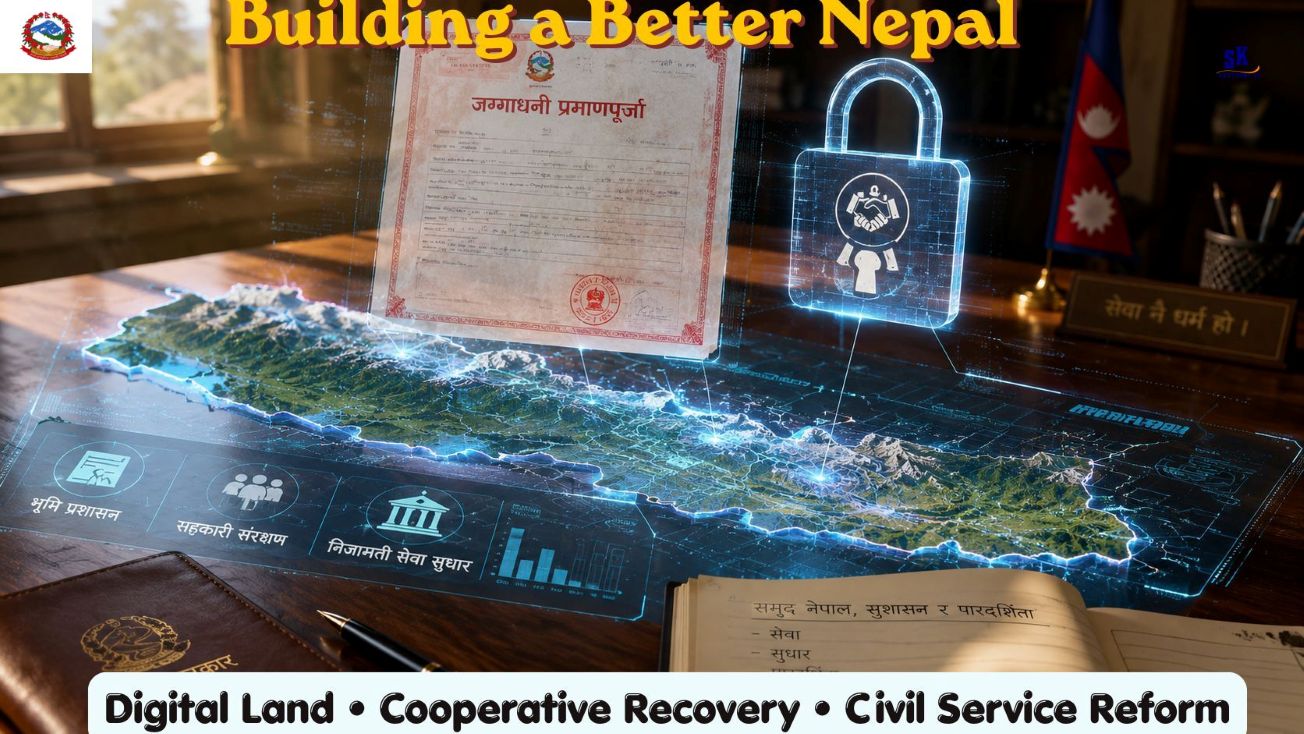
Most restructurings this size swallow a year before anything moves again. This one didn’t. Everything below, land, cooperatives, and the civil service machinery behind both, comes from the same ministry, the same hundred days, and the same forty-eight verified outcomes.
The Land Problem Everyone Has a Story About
Ask anyone who’s dealt with land paperwork here what they remember most. It’s rarely the outcome. It’s the wait.
A missing lalpurja. A plot frozen for reasons nobody explains. A survey appointment that turns into three follow-up calls and a wasted morning.
Twenty-nine lalpurjas were issued this period to landless Dalit families and sukumbasi settlers, people who had lived on land for years without a single paper proving it was theirs.
Behind that number sits a bigger one. 1,620 households from the same group now have a verified digital record, the groundwork needed before formal certificates go out at scale.
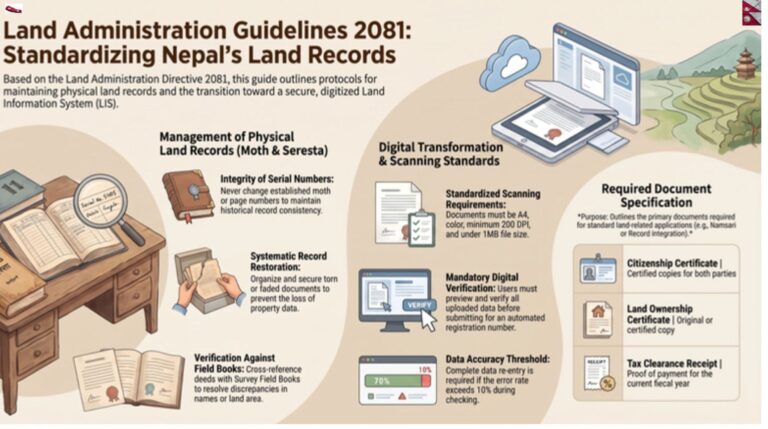
Six local levels now run their own survey and land revenue services. That means no more traveling to district headquarters just to file routine paperwork.
The Small Changes That Save the Most Time
Land freeze and release now happens through your bank. Zero Malpot visits.
The Mero Kitta app already has 4,779 active institutional users pulling maps and field records from their phones.
Survey appointments moved from walk-in-and-hope to an actual booking system.
Know your Land Identification Number? Property details now show up on the citizen app, no office trip required.
Two government databases, LRIMS and NIDMIS, are being tested together so land records can eventually cross-check against national ID data automatically. That closes a loophole that’s enabled land fraud for years.
LRIMS and NeLIS interlinkage testing is already complete, one real step toward a single land database instead of scattered ones.
A new tie-up with Nepal Clearing House Limited now enables online payment for land transactions. And Malpot offices have started restricting entry to actual service seekers, which anyone who’s watched a broker work a counter will recognize as a real shift.
Three Cases That Show This Isn’t Just Policy Language
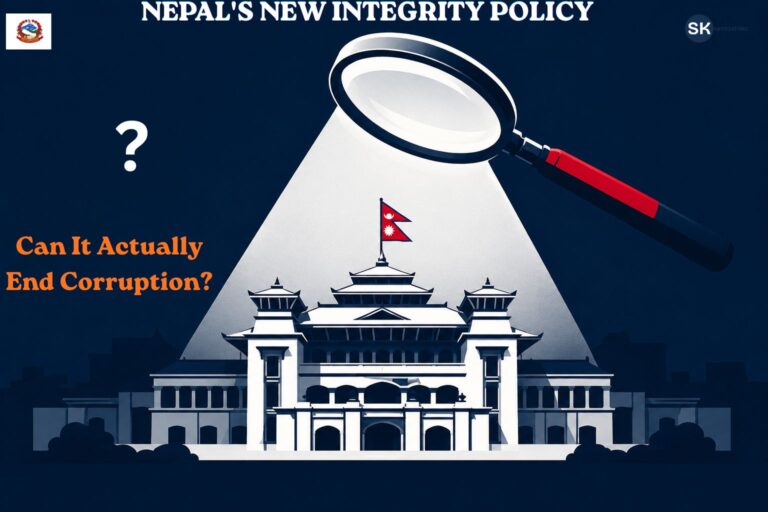
The Rawal Commission’s findings are now under implementation. All land ownership transfers stay frozen until compliance is confirmed, a move that takes real nerve given how many interests that inconveniences.
A long-running land dispute in Bitauri, Rajbiraj, in Saptari district, finally has a resolution committee report being acted on.
And a nationwide push is underway to convert unregistered bhogadhikar land into formal lease status, something that stalled under multiple previous governments and is now actually moving.
Now, the Question Everyone’s Actually Asking
Did cooperative fraud victims get their money back?
For thousands of small savers, this was never an abstract debate. It came down to one question asked over and over across years of silence: will I ever see that money again.
During these hundred days, 1,754 small savers were refunded a combined NPR 2.63 crore. Separately, NPR 4,32,82,310.73 was recovered from 154 loan defaulters, money that now flows back into the system instead of sitting lost.
A new Loan Calculation Management System now calculates exactly what each borrower owes, ending interest disputes that used to drag on for months.
A public dashboard tracks refunds and recovery in real time. Until now, the only way savers heard anything was rumor passed between neighbors.
The Cooperative First Amendment Ordinance 2083 passed the House of Representatives, rewriting the legal backbone the sector runs on. And the commission that investigated cooperative irregularities has moved into implementation, with involved staff formally asked to explain themselves.
If your own refund hasn’t arrived, your case isn’t forgotten. The system is active, trackable, and finally producing numbers instead of excuses. A year ago, none of that existed.
The Same Ministry’s Other Half: Civil Service
Land and cooperatives are the visible half of this ministry’s work. The other half, Federal Affairs and General Administration, runs quietly underneath both of them, and it’s just as much part of these same hundred days and the same forty-eight outcomes.
223 municipalities that were vacant or running on temporary officials now have a permanent Chief Administrative Officer.
Employee transfers now go exclusively through an online system, ending the old pattern of decisions made through personal connections instead of merit.
Kitabkhana, the civil service’s personnel record system, went fully digital. Any service record can now be checked online instead of dug out of a paper file somewhere.
Two employees who disappeared during study leave, and six found holding foreign residency permits, now face disciplinary action that could end their careers. That kind of enforcement is rare, and usually politically uncomfortable to push through, especially for a ministry barely three months into its own merger.
A draft Civil Service Bill is moving through the legislative process. Every local level except twenty-one passed its budget within deadline, a completion rate unusually high for any fiscal year.
A new code of conduct now applies across ministry staff and local Chief Administrative Officers. A grievance tracking portal lets citizens follow a complaint from filing to resolution. And a blueprint for a full digital profile of every civil servant is being built out right now.
One small detail says more than it should. Every ministry program now happens inside the ministry’s own hall, ending the old habit of hosting events at hotels and resorts.
What’s Still On the Way
Not everything here is finished. A draft is ready for a new law covering land survey, administration, and cooperatives together.
Land under the Prime Minister’s residence in Baluwatar is now formally registered under the Government of Nepal, closing an ownership question that lingered for years.
Civil hospital services expanded into Bagmati, Gandaki, and Madhesh provinces, with a new unit now operating inside the Singhadurbar complex itself.
So What Actually Changed for You
Strip away the department names, and two things stand out.
Land and cooperative services are shifting toward what you can handle from your phone or bank branch instead of a queue. Anyone who’s burned a full day chasing one stamp knows that shift isn’t small.
And underneath it, accountability tools are quietly being built, tools nobody sees directly but that decide how fast and how fairly your file actually moves.
A real part of this is still under construction. Draft bills aren’t laws yet. But merging two ministries and still producing forty-eight verifiable outcomes in a hundred days is an unusually fast pace for any newly formed government body. Worth checking back on, not filing away.
This account is built from records made public as part of the government’s hundred-day review.