Nepal Drugs Limited Reports First Profit in 37 Years. Can It Improve Public Healthcare in Nepal?
Nepal Drugs Limited has reported its first annual profit in 37 years.
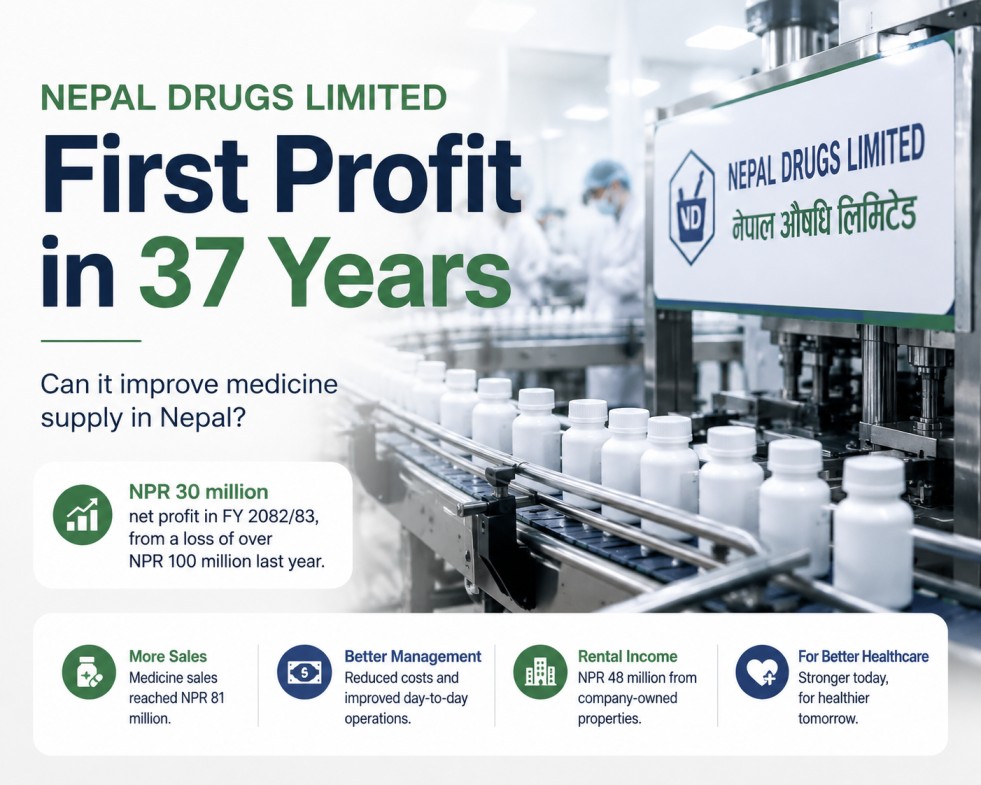
For a government-owned company that had spent decades operating at a loss, this is an important financial milestone. According to the company’s latest financial results, it earned a net profit of NPR 30 million in the fiscal year 2082/83. Just one year earlier, the company had recorded a loss of more than NPR 100 million.
The figures are encouraging, but they also raise a question that matters to ordinary citizens.
Can a financially stronger Nepal Drugs Limited improve the supply of medicines in Nepal’s government hospitals?
The answer will not be found only in the company’s balance sheet. It will depend on whether better financial performance leads to better public healthcare.
What Changed?
According to Nepal Drugs Limited, three factors helped improve its financial position during the last fiscal year.
The company sold more medicines than in previous years. Medicine sales exceeded NPR 81 million, making it the highest annual sales figure in recent years.
It also reduced operating expenses by controlling unnecessary costs and improving day-to-day management.
Another important source of income came from company-owned land and buildings. Rental income reached approximately NPR 48 million, providing additional financial support alongside medicine sales.
These three factors helped the company move from a significant loss to a profit within a year.
The company also reported holding around NPR 20 million in cash reserves, while about NPR 5 million remains to be collected from customers.
The Improvement Was Gradual
One profitable year does not always tell the whole story.
The sales figures from the past five years show that the company’s recovery has been gradual rather than sudden.
Medicine sales increased from around NPR 25 million in fiscal year 2078/79 to more than NPR 81 million in 2082/83.
Steady growth over several years usually indicates improving demand and better financial management rather than a single successful contract.
That makes this year’s profit more meaningful than it may first appear.
Why Does This Matter?
Many people may never visit Nepal Drugs Limited or know which medicines it manufactures.
Even so, its performance can affect public healthcare across the country.
The company supplies medicines to government hospitals, provincial health supply centres and local governments. If domestic production continues to improve, government health institutions may be able to rely more on medicines produced within Nepal for some essential treatments.
Public healthcare depends not only on medicine production but also on government spending. Every year, the national budget determines how much can be invested in hospitals, essential medicines and health programmes. If you would like to understand this year’s health priorities, you can also read our analysis of the Budget 2083/84 and its impact on Nepal’s health sector.
For patients, the important question is not whether the company made a profit.
The important question is whether essential medicines are available when they visit a government hospital.
Financial improvement creates an opportunity. Better healthcare depends on how that opportunity is used.
Challenges Still Remain
The positive financial result does not mean every problem has been solved.
Nepal Drugs Limited still has approximately NPR 1.26 billion in government debt. Interest liabilities continue to increase, and tax obligations also remain outstanding.
Production capacity is another challenge.
Years ago, the company produced more than 140 different medicines. Today, it manufactures only 11 products, including paracetamol, folic acid and oral rehydration solution.
Management has announced plans to introduce another 10 medicines in the coming months, including medicines commonly used for diabetes, high blood pressure and iron deficiency.
Increasing production is important. Ensuring those medicines reach hospitals and patients consistently will be even more important.
What Should Citizens Watch Next?
The company’s return to profit is encouraging, but one successful financial year is only the beginning.
The next questions are practical.
Will more government hospitals purchase medicines produced by Nepal Drugs Limited?
Will production continue to expand?
Will patients notice better availability of essential medicines?
Will government agencies strengthen coordination to support domestic medicine production?
The answers to these questions will show whether this financial recovery becomes a lasting improvement.
Final Reflection
Government-owned companies are created for a different purpose than private businesses.
Profit helps them remain financially sustainable, but public service is the reason they exist.
If Nepal Drugs Limited continues to strengthen both its finances and its medicine supply, the benefits will extend beyond the company itself. Government hospitals could become more reliable, taxpayers could receive better value from public investment, and patients could gain more dependable access to essential medicines.
A profitable government company is good news. Reliable medicines in public hospitals are what make that news meaningful.