Interview Tips in Nepal: The Ultimate Guide to Crack Any Job Board
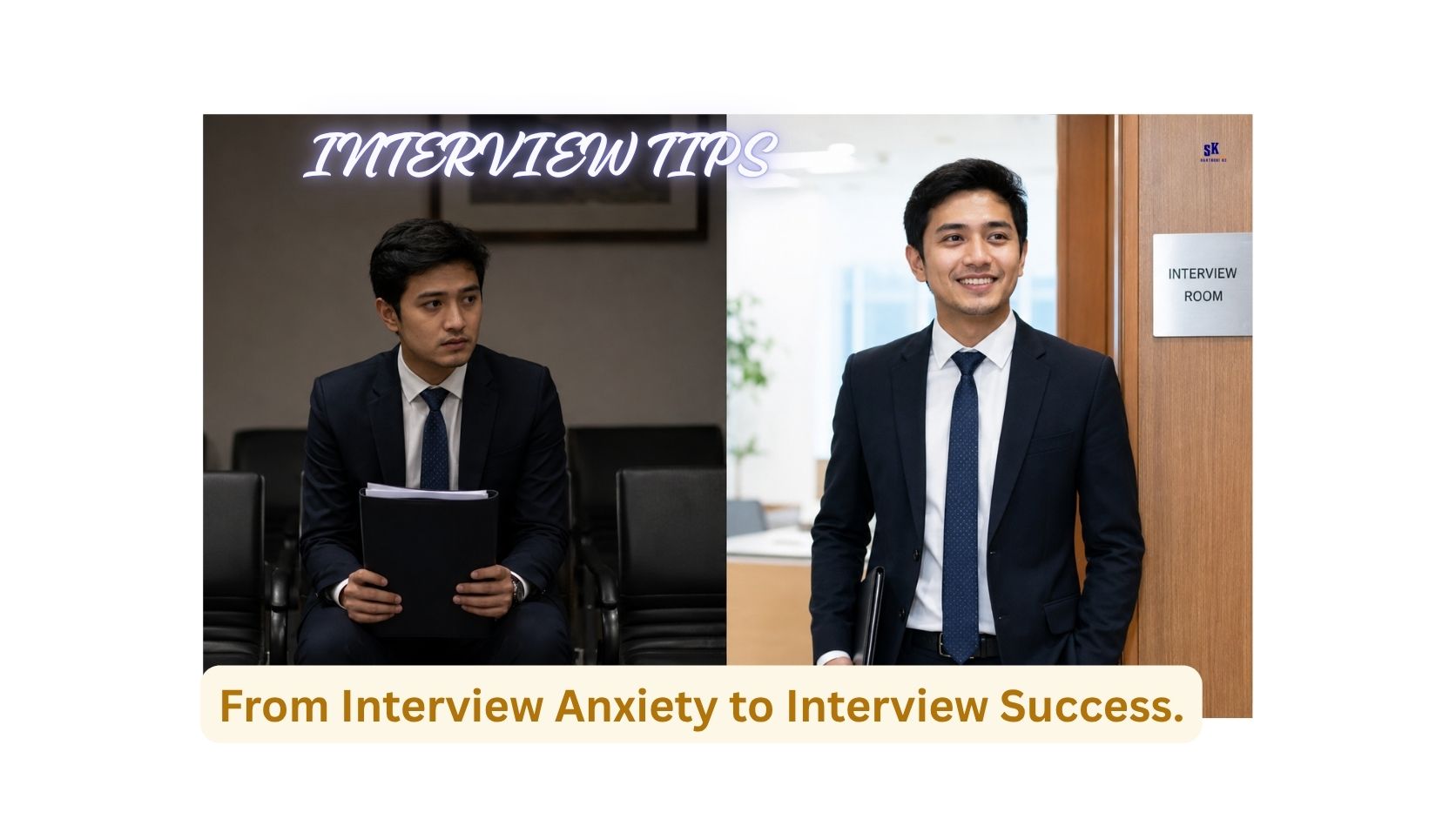
Have you ever stood outside an interview room in Kathmandu, holding your document file with sweaty palms, wondering if your mind will go completely blank the moment you step inside?
You are not alone. Facing a hiring panel in Nepal can feel like an absolute battle against your own nerves. The pressure is real, the competition is fierce, and the silence inside the room can be deafening. Whether you are appearing for a highly structured government oral exam, trying to clear a demo class at a premium private school, pitching your skills to a modern tech startup, or aiming for a corporate banking seat, the anxiety remains identical. Still deciding which path makes more sense for you long-term? Read our breakdown of government jobs vs private jobs in Nepal before you commit to a sector.
But clearing a selection board is not a lottery, nor is it about memorizing a 500-page textbook. It is a strategic game of psychological control, structured presentation, and aligning your value with institutional goals.
This human-first, comprehensive masterclass breaks down honest, field-tested interview tips in Nepal built from real sweat, real failures, and actual breakthroughs across every major professional sector in the country.
1. Reset Your Brain with the 4-4-4 Breathing Technique
When you are sitting in the waiting corridor, listening to the names of other candidates being called out, your body undergoes a classic “fight-or-flight” response. Your heart rate spikes, your breathing becomes shallow, and cortisol floods your brain. This raw nervousness is the number one reason highly qualified candidates freeze, stutter, or deliver weak, disjointed answers.
During early Loksewa oral boards or high-stakes corporate panels, looking at the serious, unsmiling faces of experts can completely jam your cognitive processing. You know the facts, but you cannot access them. To combat this, you must use the profound science of the 4-4-4 box breathing technique.
Before you step through the door, sit upright in your chair, plant both feet flat on the floor, and run through this deliberate respiratory cycle:
[Step 1] Inhale slowly through your nose for 4 seconds.
[Step 2] Hold that oxygen completely inside your lungs for 4 seconds.
[Step 3] Exhale smoothly through your mouth for exactly 4 seconds.
Repeat this loop three to four times. Culturally, we are taught to just “be brave,” but biologically, you need to force your heart rate down. The 4-4-4 technique signals your parasympathetic nervous system that you are safe. It halts adrenaline production, clears cognitive fog, and gives your speaking voice a deep, resonant, and authoritative tone that commands immediate respect from the panel.
2. The Fatal Blindspot: Skipping Related Sector Research
Going into an interview assuming your general intelligence or academic transcripts will rescue you is a massive, dangerous trap. Institutional blindness can lead to devastating blunders.
For example, imagine a candidate interviewing for a Section Officer (Sakha Adhikrit) post under the Public Service Commission. When asked which ministry they prefer, they confidently choose the Ministry of Federal Affairs and General Administration (MoFAGA) because they want to “fix district administration offices and simplify citizenship (Nagarikta) distribution.”
This is an instant red flag. District Administration Offices and citizenship distribution fall entirely under the jurisdiction of the Ministry of Home Affairs (MoHA), not MoFAGA. If you cannot differentiate between the core functions of these ministries, the panel will question your basic administrative awareness.
To avoid this trap, customize your research based on the sector:
- Government/Public Sector: Do not just read the constitution. Memorize which ministries govern which departments, understand current administrative challenges, and cross-reference how structural funding is distributed under the latest financial guidelines.
- Banking Sector: Learn the bank’s class rating (Class A Commercial Banks vs. Class B Development Banks), their recent Non-Performing Loan (NPL) status, and major digital banking shifts.
- Tech Houses & Startups: Understand their software stack, target audience, and active digital footprint.
- Private Schools: Audit their past achievements, specific curriculum boards, and institutional philosophies.
3. Mastering Sector-Specific Expectations across Nepal
Different organizations operate on entirely different cultural frequencies. To win the room, you must understand exactly what the panel is looking for.
I. The Banking Sector: The “Smiley & Polite” Metric
Nepal’s banking sector (BFIs) is built entirely on public trust and immaculate service execution. When banks interview candidates, they are looking for a well-getup, polished appearance combined with a genuinely smiley personality and polite communication skills.
Banks handle massive financial stress daily. The panel is assessing whether you can deal with an angry customer at the counter or handle long balancing hours with a calm, smiling face. Your answers must project absolute financial integrity, numbers orientation, and a customer-first attitude.
II. Startups and On-Demand Tech (e.g., Pathao, InDrive, Tech Houses)
The modern digital ecosystem in Nepal operates on a highly pragmatic, action-first wavelength. If you are interviewing at tech-driven platforms like Pathao or InDrive, the panel’s focus shifts drastically away from pure paper certificates.
Instead, their main focus is on raw skills: technological fluency, communication efficiency, map awareness, and domain expertise. However, do not confuse a casual tech environment with carelessness; neatness and cleanliness are highly valued. Showing up clean, organized, and showing a deep understanding of local logistics and tech frameworks is what seals the deal.
       [Traditional Sectors]                      [Modern Tech/Startups]
  Transcripts ──► Formal Suit ──► Laws      Skills ──► Portfolio ──► Tech Adaptability
III. The NGO / INGO Development Sector: Impact and English Fluency
The development sector in Nepal is intensely communicative and values-driven. To crack an NGO/INGO interview, you must display a high capacity for impactful communication.
The panel wants to see empathy and an understanding of grassroots social issues. Furthermore, because these organizations coordinate heavily with global donors and compile extensive field reports, well-spoken English and strong documentation skills are mandatory prerequisites to move past the initial screening.
IV. School Teaching Panels: The “Sana Vaibahini” Mindset
In school hiring setups, the panel filters candidates through a live Demo Class. To conquer demo class anxiety, flip your mental script: treat everyone in that room exactly like your own younger siblings (Sana Vaibahini).
The moment you look at a room full of evaluating coordinators and view them with parental or sibling affection, your body language shifts. Your voice loses its defensive, nervous edge and gains natural warmth and clarity. Instead of lecturing rigidly at the whiteboard, you begin to interact, smile, and simplify complex terms using relatable analogies.
Sector Matrix: Panel Behaviors & Dress Codes
| Industry | Primary Evaluation Core | Panel Atmosphere | Dress Code Protocol |
| Banking | Customer service mindset, numerical accuracy, politeness. | Highly formal & corporate. | Full corporate formal (Suit, tie, neat grooming). |
| Tech/Startups | Domain skills, map/tech awareness, adaptability. | Casual but highly alert. | Neat, clean, semi-formal/smart casual. |
| NGO / INGO | Communication impact, English fluency, social values. | Warm but strictly analytical. | Smart business formal. |
| Loksewa (PSC) | Legislative knowledge, neutrality, integrity. | Rigid, traditional, structural. | Strict formal (Daura Suruwal or dark suit). |
| Teaching | Pedagogical delivery, patience, empathy. | Observant & interactive. | Clean, neat, approachable formal wear. |
4. Dress Code: Prioritize Clean, Simple Comfort Over Expensive Luxury
There is a huge misconception in Nepal that you need to wear incredibly expensive, branded formal wear or heavy traditional outfits to impress an interview panel. This mindset often backfires. If you wear something stiff, overly tight, or unfamiliar, you will spend the entire interview fidgeting, adjusting your clothes, and feeling physically restricted.
Your attire should aim for a simple, clean, and understated formal look that prioritizes physical comfort.
- The Comfort Rule: Ensure your shoes are cleanly polished, your hair is neatly groomed, and your clothes allow you to sit comfortably for an hour without pinching your waist or pulling at your shoulders. When your body feels comfortable and unrestrained, your brain stays focused on answering questions rather than managing physical discomfort.
5. Deconstructing the “Source-Force” Myth: Capacity Outperforms Influence
One cannot discuss the job market in Nepal without addressing the elephant in the room: the widespread belief in “Source-Force” (nepotism/nepali political connection). Many young graduates disheartenedly claim that interviews are just a formality and that jobs are only handed out to those with high-level connections.
Here is the unfiltered reality you must understand to maintain your competitive edge:
In the Loksewa (PSC) Ecosystem
Source-force is practically impossible within the Loksewa system. The Public Service Commission of Nepal stands as one of the most transparent, strictly codified institutional frameworks in the country. The written exams are double-blind coded, and the interview panels consist of multiple independent members, joint secretaries, and external experts who score candidates using strict, objective matrices. No single individual can manipulate the final merit list. If you have the capacity, you will secure your seat. Before reaching the interview stage, though, getting the written exam strategy right matters just as much — here’s our complete guide on Loksewa first attempt tips.
In the Private and Corporate Sectors
While it is true that the influence of networks and recommendations exists within private companies, banks, and schools, your raw capacity, confidence, and skill execution matter the most. No private business owner or corporate head will hire an incompetent manager purely based on a recommendation, because doing so directly hurts their profit margins and operational efficiency.
[Recommendation gets you a meeting] ──► [Your actual CAPACITY wins the job]
The Ultimate Survival Strategy
Do not let the “Source-Force” excuse become a psychological crutch for laziness. Your best strategy is to stay highly confident and prove to the panel from every single angle that you are uniquely equipped to handle the job.
Show them you understand the basic laws, institutional norms, and operational dynamics of their company. When you walk into the room acting as a concrete solution to their organizational problems, no recommendation letter in the world can match your value.
Summary: Preparation Defeats Luck
Ultimately, whether you are stepping into a corporate banking hall, a dynamic startup floor, or a formal government board, an interview is simply a professional conversation between your experience and an organization’s structural needs.
By taking charge of your anxiety using the 4-4-4 breathing technique, protecting your blind spots through rigorous sector research, approaching presentations with natural warmth, and showcasing undeniable operational capacity, you systematically eliminate the element of chance. Trust your preparation, respect the sector’s unique norms, and walk into that room knowing your skills have earned you a rightful seat at the table.
(Note: For official civil service vacancy timelines, exam structures, and direct recruitment patterns, always cross-verify data directly on the Public Service Commission of Nepal homepage.)