
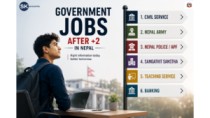
Government Jobs After +2 in Nepal: A Complete Guide for Students and Job Seekers
A student finishes +2, opens a government vacancy notice and starts reading.
Kharidar.
Open competition.
Inclusive group.
Minimum qualification.
Age limit.
Application deadline.
Some words are familiar. Others are not.
Then comes the question: “+2 sakepachi ma kun sarkari jagir ko lagi apply garna sakchhu?”
This is where many students get confused.
The problem is not that there are no government jobs. Nepal’s civil service, police, armed police, army, schools, local governments and public institutions recruit through different systems. The problem is knowing which vacancy actually matches your qualification.
A +2 certificate can make you eligible for some posts. For others, you may need a technical qualification, licence, training or a bachelor’s degree.
So, if you have completed +2 and are looking for a government job in Nepal, where should you start?
What Government Jobs Can You Get After +2 in Nepal?
There is no single “+2 government job” category in Nepal.
Different organisations recruit separately, and the qualification changes from one post to another.
For a young person searching for government jobs after +2 in Nepal, these are the main areas worth knowing about.
1. Loksewa and Civil Service Jobs
When people hear “government job,” Loksewa is often the first thing that comes to mind.
The Public Service Commission, or Lok Sewa Aayog, conducts recruitment examinations for many civil service positions.
For +2 graduates, Kharidar or equivalent positions are especially relevant. The Commission’s current vacancy listings include both Kharidar and Nayab Subba or equivalent posts, but eligibility must always be checked against the particular advertisement.
This is important because people often assume that if one post accepted +2 in the past, the same qualification will automatically work for every future vacancy.
It does not.
The service, group, post and specific advertisement can change the requirement.
Nayab Subba also should not simply be treated as a “+2 job.” The qualification depends on the relevant post and notice.
So if you are searching for Loksewa jobs after +2, do not stop at the post name. Open the actual vacancy notice and read the qualification section.
That one habit can save you from preparing for a post you cannot apply for.
2. Nepal Police
A +2 graduate can also look at Nepal Police recruitment.
But Police recruitment works differently from the regular civil service system. Nepal Police publishes its own recruitment notices and provides an online recruitment system where applicants select vacancies for which they are eligible.
Different ranks have different requirements.
For example, recruitment can include posts such as Police Constable, Assistant Sub-Inspector and Inspector, but the qualification, age and physical requirements are not the same for all of them.
This is where a lot of confusion starts.
A student may see that one police post accepts +2 and assume that another rank will also accept it.
That assumption can be wrong.
For Police jobs, check three things together:
Education. Age. Physical requirements.
Height, weight, eyesight and other physical standards may be part of the selection process depending on the post.
If you are 18–25 and considering a career in Nepal Police, checking these requirements early is useful. You do not want to discover a physical requirement after spending months preparing only for the written examination.
3. Armed Police Force
The Armed Police Force, Nepal is another option for young people looking for government-sector jobs after +2.
Like Nepal Police, APF has its own recruitment process and different posts have different requirements.
Recent APF vacancy notices show recruitment for different positions and categories, so the post you are interested in matters more than simply asking whether “+2 is enough.”
Some positions may have lower academic requirements, while supervisory, technical or specialised positions can require higher qualifications.
Physical fitness can also be an important part of the selection process.
If APF interests you, check its official recruitment notice rather than preparing from an old vacancy shared on social media.
4. Nepal Army
Nepal Army recruitment is also divided into different categories.
There are soldier-level opportunities, technical positions, medical-related positions and officer-level entry routes.
That means the qualification is not the same for everyone.
Some recruitment categories may accept SEE or +2-level qualifications, while technical positions require the relevant technical qualification and officer-level routes can have higher academic requirements.
So the question should not simply be:
“Can I join Nepal Army after +2?”
A better question is:
“Which Nepal Army vacancy matches my qualification?”
That change in the question makes the search much easier.
Always check the current recruitment notice for the exact category you are interested in.
5. Can You Become a Government Teacher After +2?
This is one of the most common questions among young people.
The short answer is:
+2 alone does not automatically make you a permanent government teacher.
Teaching has its own qualification and licensing system.
The Teacher Service Commission publishes notices for teaching licences and teacher recruitment at different school levels. Its current notices include separate processes for teaching licences and teacher positions.
So there is an important difference between:
+2 qualification
Teaching licence
Permanent teacher recruitment
They are not the same thing.
If teaching is your goal, first find out which level and subject you want to teach, then check the qualification and licence requirements for that pathway.
Do not assume that passing +2 alone means you can immediately apply for a permanent government teaching post.
6. Health and Technical Government Jobs
Your +2 stream matters even more when you are looking at technical jobs.
A student with plain +2 and a student with +2 plus a recognised technical qualification may not have the same options.
Government technical jobs can be found in areas such as:
- health
- agriculture
- veterinary services
- engineering
- IT
- electrical work
- civil and survey work
- other technical services
For these jobs, the vacancy may require a specific diploma, certificate, CTEVT qualification or other recognised technical qualification.
So if you have completed a technical course after or alongside +2, do not search only for “government jobs after +2.”
Search using your actual qualification as well.
For example:
“CTEVT government jobs Nepal”
or
“health assistant government vacancy Nepal”
The more specific your qualification search is, the more useful the results become.
7. Local Government Jobs
Government jobs are not limited to Kathmandu or central government offices.
Nepal’s municipalities and rural municipalities also publish vacancies for administrative, technical and support positions.
These vacancies can be easy to miss because they may be published by the particular local government rather than appearing in the same place as every national-level vacancy.
If you live outside Kathmandu, check your municipality or rural municipality’s official website and notice board as well.
Sometimes the right vacancy is closer to home than you expected.
8. Public Institutions and Government-Owned Organisations
There is another distinction worth knowing.
Not every organisation people casually call a “government office” is part of the civil service.
Public corporations, development boards, government-owned banks and other public institutions can recruit under their own rules.
Their qualification, recruitment process and service conditions may be different from regular civil service positions.
So when you compare a job in a public institution with a Kharidar or other civil service post, first understand what type of organisation is actually hiring.
What Jobs Can You Apply for With +2?
The easiest way to understand government jobs after +2 in Nepal is to divide them into three groups.
+2 only
Some vacancies accept +2 or an equivalent qualification as the minimum academic requirement.
But this does not mean every government vacancy at the same level will accept every +2 graduate.
The exact notice decides.
+2 plus a technical qualification
If you have a technical diploma, certificate or other recognised qualification, you may have access to technical government vacancies that a student with plain +2 cannot apply for.
This is especially relevant in health, engineering, agriculture, IT and similar areas.
+2 plus licence or additional training
Teaching is a good example.
Your +2 qualification may be part of the pathway, but a teaching licence and other requirements can come into the picture before permanent teacher recruitment.
The main point is simple:
Do not search only by the words “government job.” Search by your actual qualification.
Your Qualification Matters More Than the Word “Government”
Two vacancy notices can both say “government job” and still have completely different eligibility requirements.
One may accept +2.
Another may require a bachelor’s degree.
Another may require a specific subject.
Another may require a technical certificate.
Another may include a physical test.
Before applying, check these things in the actual notice:
- educational qualification
- subject or stream
- minimum grade or division, if specified
- age limit
- age calculation date
- citizenship requirements
- inclusive category provisions
- physical requirements
- licence or certificate
- experience, if required
- application deadline
Do not decide your eligibility from the vacancy headline alone.
The qualification section is where the real answer is.
Where Can You Find Government Job Vacancies in Nepal?
This is probably the most useful habit a new job seeker can develop.
A vacancy may first reach you through Facebook, TikTok, Messenger or a friend’s message.
That is fine.
But do not treat the shared post as the final source.
Find the original notice. You can also use reliable government services and official portals to find official application pages, notices and other public resources
For civil service vacancies, check the Citizen Portal . Its official website publishes vacancy information along with details such as advertisement number, post, deadline and double-fee date.
For Police recruitment, check the official Nepal Police career and vacancy pages.
For Armed Police Force recruitment, check the APF vacancy page.
For teaching licences and teacher recruitment, check the Teacher Service Commission.
You should also check:
- Nepal Army recruitment notices
- relevant ministries and departments
- municipality or rural municipality websites
- official career pages of public institutions
- Gorkhapatra and Nepal Gazette where relevant
A screenshot can tell you that a vacancy exists.
The original notice tells you whether you can actually apply.
How Do You Know If You Are Eligible?
You do not need a complicated system.
Use the same process every time.
1. Find the original vacancy notice
Do not rely only on a Facebook post or forwarded screenshot.
2. Read the qualification section
Read the whole section, including notes and conditions.
3. Check your +2 stream
If the vacancy asks for a particular subject or stream, make sure yours matches.
4. Check your age
Look at the exact cutoff date in the notice.
Do not calculate your age using today’s date if the notice uses another date.
5. Check additional requirements
This may include:
- physical standards
- licence
- training
- technical certificate
- experience
6. Check your documents
Make sure you have the required certificates and identification documents before the deadline.
7. Check the deadline
Nepal’s vacancy notices commonly include a normal deadline and, where applicable, a double-fee period. The official notice tells you which dates apply.
8. Apply through the official system
Use the application method mentioned in the vacancy notice.
Do not pay someone simply because they claim they can “apply for you.”
What Should a +2 Student Do Now?
You do not have to wait for a vacancy before doing anything.
First decide what type of government job actually interests you.
If you like administrative work, learn how Loksewa recruitment works.
If you are interested in Police, Army or APF, check the physical requirements early.
If teaching interests you, understand the licence pathway.
If you have a technical qualification, search for vacancies related to that qualification.
Then start following the official vacancy sources.
Do not prepare seriously for five completely different exams at the same time.
A student preparing for Kharidar, Police recruitment and a teaching licence may end up spreading their time too thin.
Choose a direction first.
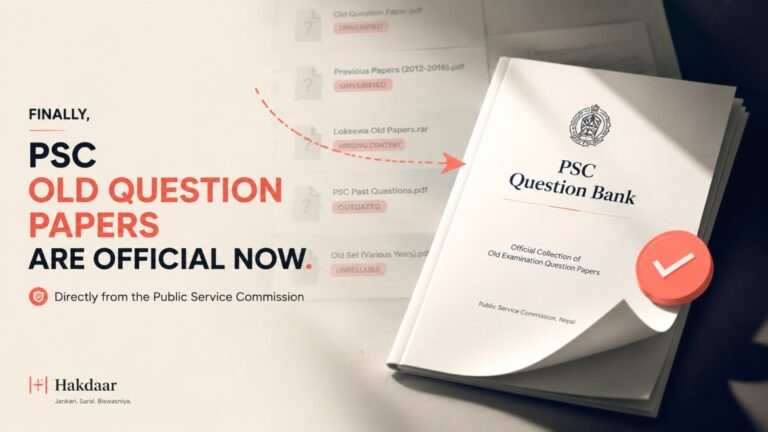
Then understand the syllabus and selection process. If you are considering Loksewa after +2, understanding the examination pattern and practising PSC old question papers can help you prepare more strategically..
Also keep your basic documents organised.
Your academic certificates, citizenship certificate and other required documents should be ready before a vacancy deadline arrives.
That sounds simple.
It can save you a lot of stress later.
Common Mistakes +2 Job Seekers Make
Some mistakes happen again and again.
Applying because the post name looks familiar
A familiar post name does not mean you meet the current qualification.
Trusting an old Facebook post
A vacancy shared months ago may already be closed or may have been corrected later.
Ignoring the qualification details
One small sentence about subject, grade or technical qualification can change your eligibility.
Miscalculating age
The relevant age is usually based on the date specified in the vacancy notice, not simply your age today.
Starting preparation without checking the syllabus
Different recruitment systems test different things.
Assuming every +2 vacancy is the same
It is not.
Your +2 stream, additional qualification and the exact post all matter.
Confusing teaching licence with a teaching job
A licence is part of the pathway. It is not automatically the same as getting a permanent government teaching post.
Ignoring physical requirements
For Police, Army and APF recruitment, physical requirements can be part of the selection process.
These mistakes usually do not happen because someone is incapable.
They happen because the applicant moves too quickly after seeing a vacancy.
Before You Apply: Check These 7 Things
Save this list before applying for any government vacancy.
- Exact post and service/group
- Minimum educational qualification
- Age limit and cutoff date
- Physical or medical requirements
- Required documents
- Application deadline
- Official application portal
If all seven are clear, then move to the application.
If even one is unclear, go back to the original notice.
Where Does This Leave You?
If you have just completed +2, you do have government job options in Nepal.
But there is no single list that can tell every +2 graduate which job they can apply for.
Your qualification matters.
Your subject matters.
Your age matters.
Sometimes your technical certificate matters.
Sometimes your licence matters.
And the vacancy notice matters most.
A useful rule to remember is this:
Your +2 certificate tells you where to start looking. The vacancy notice tells you whether you can apply.
That difference is small, but it can save you from preparing for the wrong post.
Government jobs after +2 are available across different sectors, from civil service and security services to teaching, technical work, local government and public institutions. The right choice depends less on finding the longest list of vacancies and more on finding the vacancy that actually matches you.
Frequently Asked Questions
Can I get a government job after +2 in Nepal?
Yes. Some government and public-sector vacancies accept +2 or equivalent qualifications, but the exact options depend on the post, service, group and current vacancy notice.
Which government jobs are available after +2 in Nepal?
Possible areas include certain civil service posts, Police and Armed Police positions, some Army recruitment categories, teaching pathways, technical posts and local-level vacancies. Not every post is open to every +2 graduate.
Can +2 students apply for Loksewa?
Yes, where the specific Loksewa vacancy sets +2 or an equivalent qualification as the minimum requirement. The current Public Service Commission vacancy notice should be checked before applying.
Can I apply for Nepal Police after +2?
Yes, depending on the post and current recruitment notice. Nepal Police publishes separate vacancy notices and eligibility requirements for its recruitment categories.
Can I join Nepal Army after +2?
Some recruitment categories may be open to candidates with +2, while other categories require different or higher qualifications. Check the current Army recruitment notice for the exact post.
Can I become a government teacher after +2?
Not automatically. Teaching has separate qualification, licence and recruitment requirements. The Teacher Service Commission publishes teaching licence and teacher recruitment notices for different school levels.
What is the age limit for government jobs after +2?
There is no single age limit for every government job after +2. Civil service, Police, APF, Army, teaching and other organisations can have different rules. Always check the age clause and cutoff date in the specific vacancy notice.
Where can I find government vacancies in Nepal?
Start with the official website of the organisation recruiting for the post. For example, check the Public Service Commission for civil service vacancies, Nepal Police for Police recruitment, APF for its vacancies and Teacher Service Commission for teaching-related notices.
If you have completed +2 and are unsure where to begin, you do not need to apply everywhere.
First find the type of job that fits your qualification.
Then find the official vacancy.
Then read the notice.
That is a much better place to start.




3 Comments