

Nepal Flood Relief Fund 2026: Where to Donate Safely for Rasuwa Flood Victims
(Updated August 30, 2026-7 pm)
Right now, somewhere in Rasuwa, a mother is holding a blanket that isn’t warm enough. A father is counting how many days of rice he has left.
This is what a flood leaves behind, long after the water goes down.
I’ve worked inside Nepal’s government for almost ten years. Every time a disaster like this hits, I see the same two things happen — people wanting to help, and fake pages trying to steal from them.
So here’s the short version. Where your money should go. How you know it’s real. And how to send food, clothes, or medicine the right way.
What’s Happening Right Now
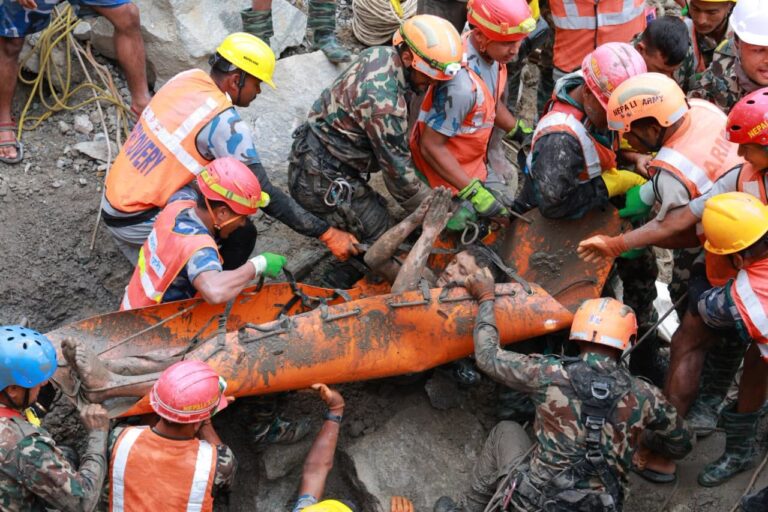
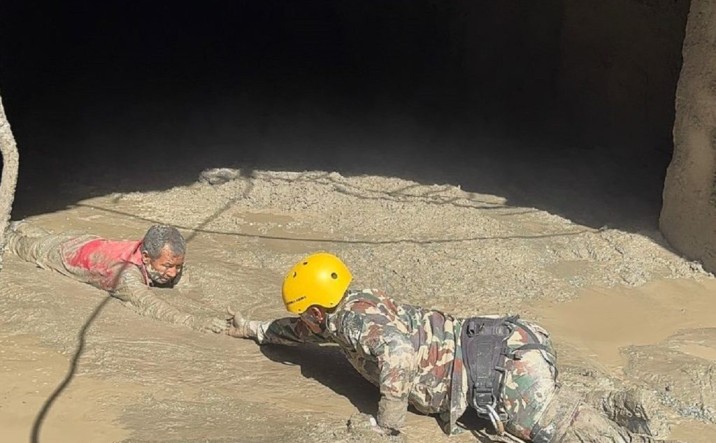
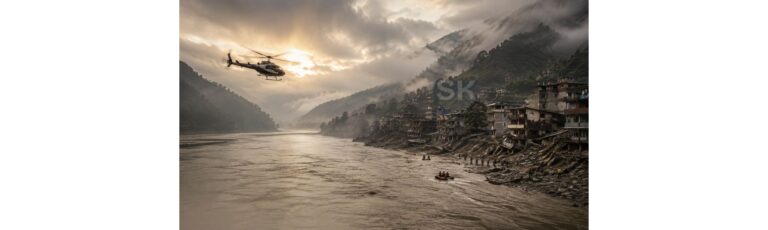
A flood hit the Bhote Koshi River in Rasuwa on Wednesday morning. Within hours, it reached Nuwakot, Dhading, Gorkha, and Chitwan too.
Nobody has a final number yet — not the deaths, not the missing. Rescue teams are still reaching villages that have been cut off for days.
[For the latest verified death toll and missing count, see the live update at santoshikc.com.np/current-watch/rasuwa-flood-missing-person/ — pulled directly from NDRRMA.]
Roads, bridges, and schools that took years to build are gone. Behind every number is a family waiting for news, dry clothes, or medicine they ran out of days ago.
Money: Only the Official ‘Nepal Flood Relief Fund’
The safest way is the Prime Minister’s Disaster Relief Fund, run by the Office of the Prime Minister.
By law, this money can only go to rescue, treatment, relief, and rebuilding — never to office costs or salaries.
Donating from within Nepal:
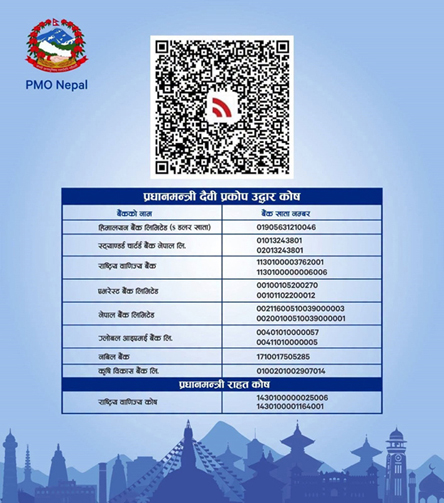
The account details and QR code above are from the official PMO Nepal page – scan or zoom in to donate directly by bank transfer. The safest, most direct route is the Prime Minister’s Disaster Relief Fund, run through the Office of the Prime Minister and Council of Ministers.
By law, this fund exists only for rescue, treatment, relief and rehabilitation. It cannot be spent on office costs or staff allowances. Every rupee that goes in is meant for someone who lost something in this flood.
You can donate directly here: Prime Minister Relief Fund
If you are Nepali and living abroad, your local embassy or consulate has already put out an appeal. They can guide you to a verified channel.
Donating from abroad — for Nepali diaspora and foreign donors:
The official gateway now accepts international cards and digital payments, directly. No remittance app, no middleman.
- Go to Prime Minister Office Web.
- Click “Donate for the Government of Nepal Prime Minister Disaster Relief Fund”
- Pick how to pay:
- Donate via Card — any international debit or credit card, no Nepali bank account needed
- Donate via NepalPay QR — mobile banking, connectIPS, digital wallets, or AliPay
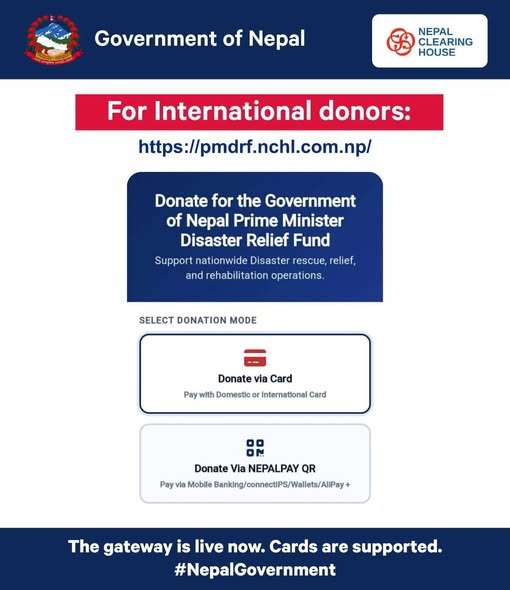
This is run jointly by the Government of Nepal and Nepal Clearing House (NCHL) — every payment traceable, every rupee going where it should. If you’re Nepali and living abroad, check with your embassy too — some are running their own verified drives.
One honest warning, the kind I would give a colleague. Fake fundraising pages appear within a day of any disaster this size. Some copy the exact wording of real government appeals. Before you send a rupee anywhere outside the official fund or your embassy, take thirty seconds to check where it actually goes.
It is not being overly cautious. It is just what experience teaches you.
Sending Food, Clothes or Medicine? Here’s the Right Way
A flood destroys kitchens, closets, and medicine boxes just as much as it destroys bank balances. If you’d rather send something you can touch, here’s how to make sure it actually gets there.
Don’t send it alone. Go through one of these two places first:
- Your local Chief District Officer (CDO) office — they know what’s needed, where, and how to get it there.
- The Social Welfare Council — for groups, NGOs, or bigger donations.
Skipping this step is the biggest reason relief goods get stuck at a checkpoint instead of reaching a family.
What’s actually needed:
- Food: rice, lentils, instant noodles, biscuits, packaged drinking water
- Clothes: warm clothes, blankets, children’s clothes — Rasuwa’s higher areas get cold fast
- Medicine: sealed, unexpired first-aid supplies, ORS packets, common antibiotics only — expired or loose medicine can’t legally be given out and gets thrown away
- Shelter material: tarpaulins, tents, sleeping mats
- Small electronics: power banks, solar chargers, torches — often overlooked, genuinely needed where power is still down
Sending from abroad? Money reaches people faster than shipped goods right now. If you still want to send goods, work with a registered relief organization already active in Nepal, or ask your embassy — don’t ship independently.
What the Law Already Promises Victims’ Families
Families of those who died in this flood are owed compensation under Nepali law. This is not charity — it is a right.
Anyone injured is guaranteed free treatment through government hospitals, the Nepal Army, and the Ministry of Health. Nobody should pay out of pocket for flood-related treatment right now.
If your family has been affected, call your local ward office or District Administration Office. Asking is not a burden — it’s the reason those offices exist.
Quick Questions People Are Asking
Is it safe to donate online? Yes — use the official portal (pmdrf.nchl.com.np) or a channel your embassy has verified. Avoid social media fundraisers you can’t confirm.
Should I send money or supplies? Both are needed. Money is faster and more flexible. Supplies should always go through your local CDO office or the Social Welfare Council.
Do families need to apply for compensation, or is it automatic? Contact your ward office or District Administration Office directly — reaching out early moves things faster.
Can Nepalis abroad send physical goods instead of money? Yes, but it’s slower. Money through the official fund reaches people faster, especially in the first weeks.
What kind of medicine can I donate? Only sealed, unexpired medicine. If you’re unsure, donate money toward medical supplies instead.
You Are Farther Away. You Are Not Less Needed.
Watching this from a screen, thousands of miles away — that helpless feeling is real. Distance doesn’t make you less connected to what’s happening back home.
Help sent the right way doesn’t stay abstract for long. It becomes rice in someone’s kitchen this week. A blanket warm enough for someone sleeping somewhere unfamiliar tonight.
You cannot fix everything from where you are. But you can do the one thing in front of you, and make sure it actually gets there.
Somewhere in Rasuwa, right now, someone is waiting by a phone that hasn’t rung in days. What you send won’t undo what happened. But it tells them, clearly, that they are not facing this alone.
Related reading
Rasuwa Flood Missing List: Search, Report & Live Death Toll Updates
Nepal Flood Early Warning: The 9 AM Alert That Never Reached Rasuwa
Nepal Flood 2026: A New Lake Just Formed Above Rasuwa – And It’s Not Over Yet
Sources:
Office of the Prime Minister and Council of Ministers (OPMCM), Prime Minister’s Disaster Relief Fund National Disaster Risk Reduction and Management Authority (NDRRMA), situation update, Bhadra 14, 2083 (August 30, 2026), 9:00 AM Nepal Police
Understand. Decide. Move forward. — Current Watch, santoshikc.com.np. Written from professional experience inside Nepal’s civil service. This guide will be updated as official relief information changes.

4 Comments