
Nepal Flood Rescue: Race to Save Lives in Rasuwa
Public Insights
This is what a Nepal flood rescue looks like from the inside, not the version you see in a headline.
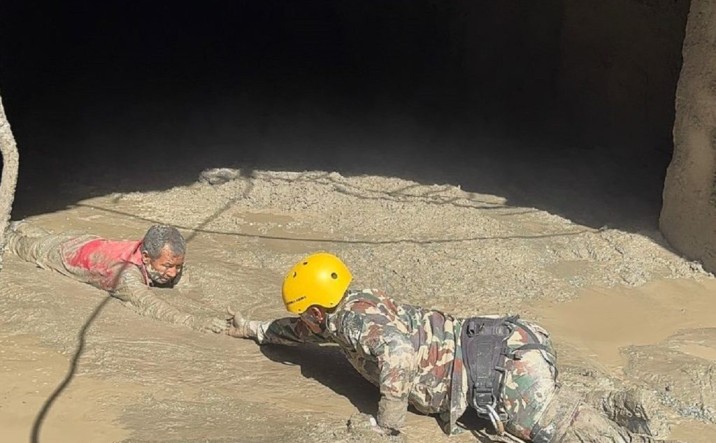
Somewhere in Rasuwa this morning, a soldier carried a man down a slope on his back.
The man’s legs wouldn’t hold him anymore.
He was alive. Caked in mud. Barely able to speak. But alive.
He had spent days trapped inside a flooded tunnel. Not knowing if anyone was coming. Not knowing if the world outside still remembered he was there.
Somebody remembered. Somebody came.
That’s the story I want to tell you today. Not just the numbers. Not just the warnings. The part where people walk back into danger, again and again, because somewhere, a person is still waiting to be found. This is the real shape of the Nepal flood rescue effort right now.
Nepal flood rescue: pulled from the dark, one by one
Workers had been trapped inside a hydropower tunnel in Rasuwa since the flood first hit.
Since early this morning, a specially trained Nepal Army team has been fighting to reach them. The ground is unstable. The terrain is brutal. Every step inside that tunnel is slower, and riskier, than normal rescue work.
They brought two more people out safely today anyway. Two more, on top of the hundreds already home.
Sit with that for a second.
Two people who were gone. Two families who had been calling, and calling, with no answer. Tonight, they’re coming home. Somewhere right now, a phone is ringing, and someone is finally hearing the voice they were afraid they’d never hear again.
This wasn’t the tunnel’s first miracle.
Yesterday, an Army team pulled off something even bigger. 350 workers and local residents were rescued from inside it, in a single operation. Three hundred fifty people who walked back into daylight after believing, for a while, that they might not.
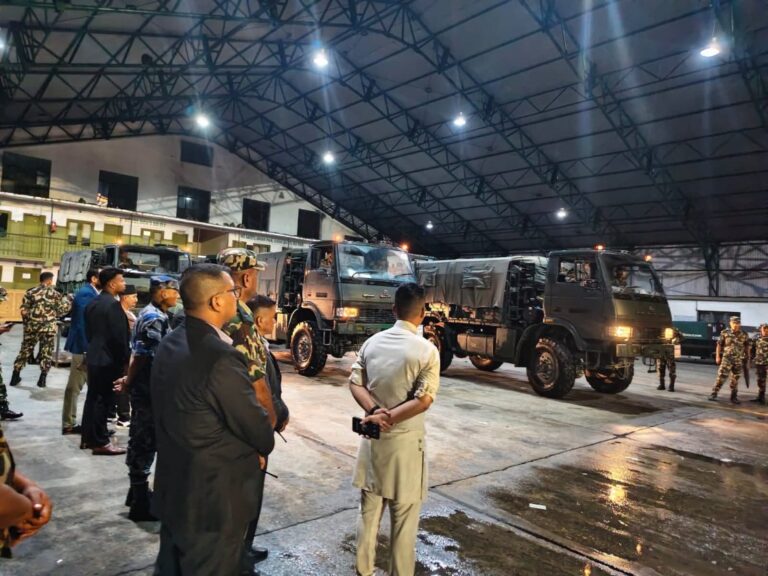
Leading today’s continued effort is a military unit from the No. 1 Second Movement Tactical Headquarters in Trishuli, under the command of Jamadar Bhaktajan Basnet. They’re working around the clock, without stopping to ask how tired they are.
The search isn’t over. Nobody yet knows how many people remain inside. So the work continues. Hour by hour. Alongside the not-knowing.
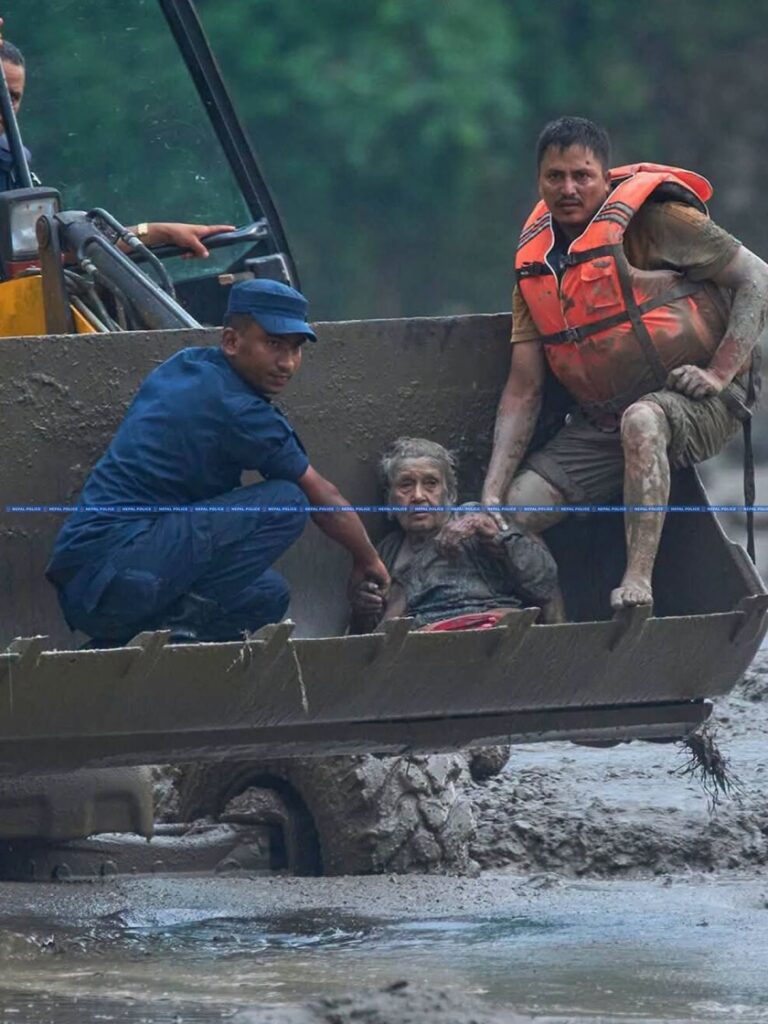
The river: told to run, they walked back in
This flood started far from Rasuwa, with a glacial collapse across the border in Tibet.
It left something behind. A lake. Held back by nothing but loose rock and debris, sitting just upstream of a valley that had already lost so much.
It was never going to stay still.
Word came in that it was rising again. A safety alert went out. Rescue teams along the river pulled back. Families nearby were told to move higher, right now, don’t wait.
Try to picture that moment. You’ve spent days digging through mud for people you love. And someone tells you to stop. Drop everything. Run. Because the same river that took so much might come back for more.
Then, slowly, the danger eased.
And the very same people who had just been told to run, turned around and walked back toward the water. Not because they had to. Because somewhere in that valley, someone was still waiting.
That’s not a headline. That’s what courage looks like when nobody’s filming it.
The sky: when the only way in was down
Roads across the flood-hit valleys are damaged or completely cut off in many places.
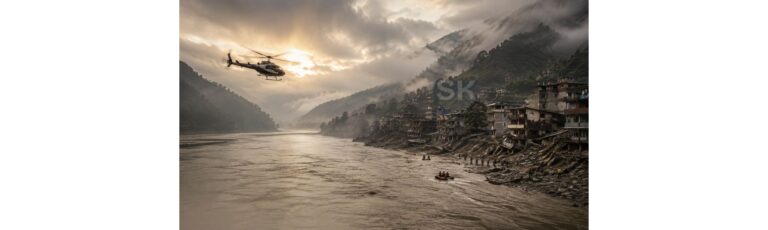
That’s where helicopters have carried a huge part of the weight. Flying survivors out. Bringing supplies in. Reaching people who would otherwise have no way out at all.
Picture a family, stranded on high ground for days, watching the sky. And then, finally, the sound of rotor blades getting closer instead of passing by.
As of the latest official count, 16 helicopters, Army and private aircraft combined, have flown close to 99 rescue sorties into the flood-hit valleys.
Behind every Nepal flood rescue, an army of ordinary people
It’s easy for a story like this to center on soldiers. Their work is dramatic. It’s visible.
But the Nepal flood rescue effort has never belonged to one institution.
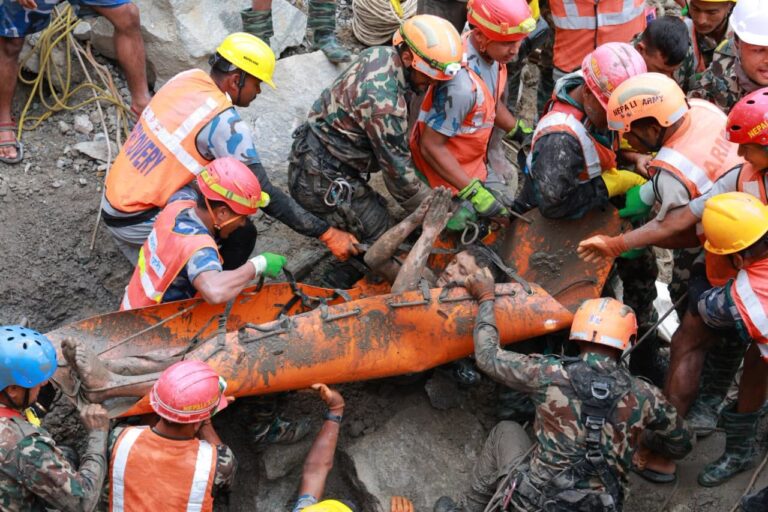
Nepal Police. The Armed Police Force. Local administration officials. Elected local leaders. Volunteers from the affected communities themselves. All of them have been part of this search and rescue work since the very first hour.
Roads had to be cleared. Shelters had to be set up. The missing had to be tracked down, one name at a time.
None of that happens with just one uniform. It happens because a lot of different people, some in uniform, some not, chose to show up, and kept showing up, on the days it would have been easier not to.
More than 15,000 security personnel, Nepal Police, Nepal Army, and the Armed Police Force combined, have been deployed across the flood-hit districts. As of the official rescue portal’s latest count, 4,451 people have been rescued in total, 681 of them Nepali citizens and 116 foreign nationals, with 8 still under treatment and the rest safely accounted for.
The numbers nobody wants to say out loud
As of NDRRMA’s most recent situation report, 579 bodies have been recovered, and 1,924 people remain unaccounted for.
Whatever the number is when you read this, I want to be honest with you. These figures move. Sometimes several times in a single day.
If you see a different number somewhere else today, that’s not a mistake. That’s just how a disaster this size looks, while it’s still happening.
Somewhere in that number is someone’s daughter who hasn’t called. Someone’s father who left for work one ordinary morning and never came home. Every single name belongs to a family staring at a phone, willing it to ring.
That’s not something a number can hold. I just wanted you to know that before you scroll past it.
But hold onto this too. Every rescue, the two men today, the 350 yesterday, is proof of something important. The number of people still missing is not fixed. It can still go down. Someone is still looking, right now, for every single name on that list.
If your phone hasn’t rung yet
If you’re trying to reach anyone in Rasuwa, please be patient.
Response times may be slower. Not because anyone stopped trying, but because rescue teams themselves have had to think about their own safety first, more than once, this week.
And if you live anywhere near the Trishuli or Bhote Koshi rivers, please, don’t go check the water yourself. Trust the people whose job it is to tell you when it’s actually safe.
Questions people keep asking
Who is carrying out the rescue work in Rasuwa? It’s a joint effort. The Nepal flood rescue operation involves Nepal Army, Nepal Police, the Armed Police Force, local administration, elected leaders, and community volunteers, all working across tunnels, rivers, and by air.
Why did rescue teams pull back at one point? A lake formed by the earlier flood began rising again, raising fears of a second flood downstream. Teams pulled back as a precaution while officials assessed the risk, then resumed once the danger eased.
Is it safe in Rasuwa now? The immediate danger from the rising lake has eased. Rescue operations have resumed, but authorities are continuing to monitor the situation closely.
How many people are still missing? As of the latest NDRRMA situation report, around 1,924 people remain unaccounted for. The number is still changing as search teams reach areas that were completely cut off. Treat any figure you see, including here, as a snapshot of one moment, not a final count.
If you’re searching for someone
If you’re trying to find out whether someone in Nepal’s flood-hit areas is safe, our guide walks through the current process, with the hotline numbers you need: Rasuwa Flood Missing List Today: Search, Report & Live Death Toll Updates
For live official updates, you can also check NDRRMA’s disaster bulletins.
Related reading
- Nepal Flood 2026: New Lake Forms Near Rasuwa, 1,924 Still Missing
- Nepal Flood Early Warning: The 9 AM Alert That Never Reached Rasuwa
- Nepal Flood 2026: How to Donate & Help Rasuwa Bhote Koshi Flood Victims
- Rasuwa Flood: India Braces for 3-Metre Flood Wave
This isn’t over. That’s exactly the point.
Rescue work like this doesn’t happen once and finish.
The Nepal flood rescue effort happens again and again. Tunnel by tunnel. Riverbank by riverbank. Flight by flight. For as long as it takes.
The people doing it right now aren’t doing it for recognition. They’re doing it because somewhere, a family is still waiting to hear that their person is safe.
And every so often, that waiting ends the way it should. A phone rings. A door opens. A name gets crossed off the list, not because anyone gave up on it, but because someone found their way home.
If you’ve made it this far, you already understand what that means.
Keep them in your thoughts today.
And hold on to this too. For every story of loss this week, there is also a story like the one from that tunnel this morning. Someone gone. And then, somehow, home.
Understand. Decide. Act.
Public Insights, santoshikc.com.np. Based on official statements as they stand right now, including the Nepal Army’s rescue update, NDRRMA’s Situation Report #07, and the official Rasuwa flood rescue portal. This article will be updated as the rescue operation continues and figures change.
4 Comments